English
What are you looking for?

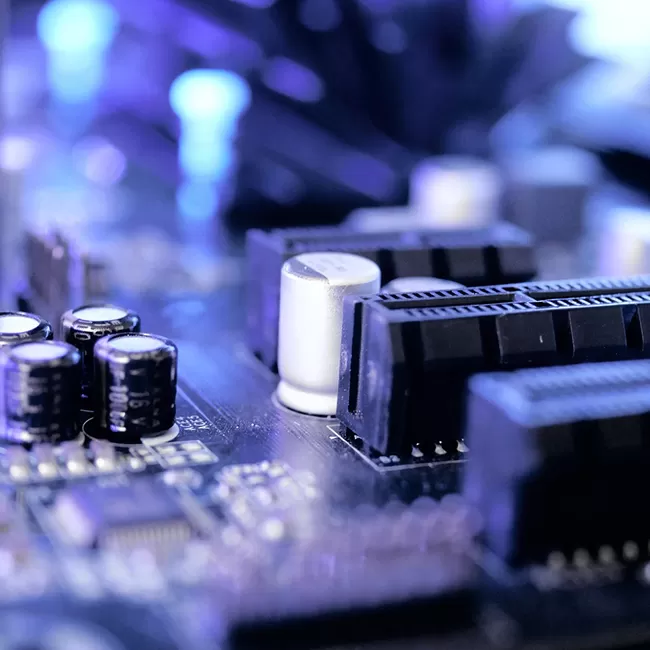
The 3C electronics sector, which encompasses computers, communications, and consumer electronics, is experiencing swift changes propelled by consumer preferences for more intelligent, efficient, and environmentally sustainable devices. Key trends such as the integration of AI, IoT, wearable technology, and sustainability are reshaping the landscape, while challenges like miniaturization and quality assurance continue to grow.
Smart Integration and IoT Devices:
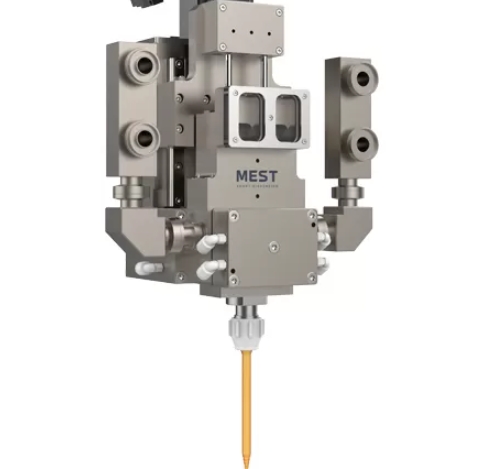
The rise of IoT-enabled electronics demands precision in manufacturing miniaturized components and ensuring connectivity. MEST Technology's advanced dispensing systems provide high-accuracy solutions for applying adhesives, conformal coatings, and protective encapsulation materials, which are critical in safeguarding sensors and processors from environmental stresses.
Wearable Devices and Mobility:
Wearable electronics require compact, lightweight designs with robust assembly techniques. MEST’ s dispensing systems offer repeatable deposition in confined spaces, supporting durable yet sleek designs for wearables like smartwatches and fitness bands.
Sustainability in Electronics Manufacturing:
With a focus on eco-friendly manufacturing, MEST’s automated dispensing systems minimize material waste and enhance production efficiency. This aligns with sustainability goals by reducing excess usage of adhesives, coatings, and sealants in electronics assembly.
Compact and High-Performance Components:
The trend of miniaturization in devices like foldable smartphones and ultra-slim laptops increases the need for precision. MEST’s solutions excel in high-speed, fine-line dispensing for assembling microelectronic components, guaranteeing reliability and functionality in compact designs.
Resilient Manufacturing Processes:
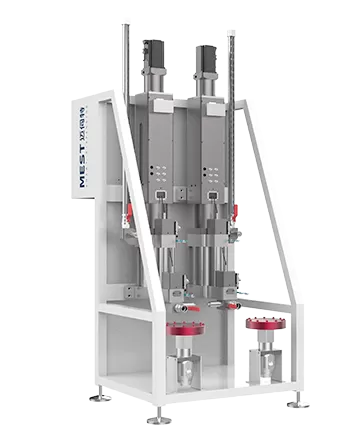
MEST Technology’s modular dispensing systems support diversified and localized production, ensuring consistency and adaptability in electronics manufacturing despite global supply chain challenges.
Electronics is a necessity of our daily life. To give our customer a perfect product experience, let MEST refine your production line and make your products even more trustworthy!
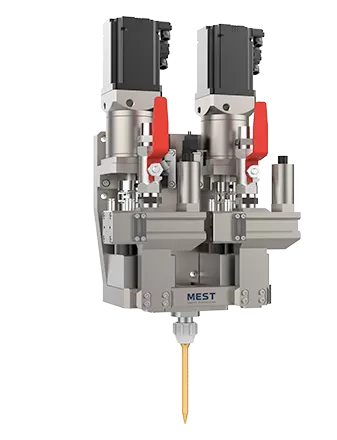
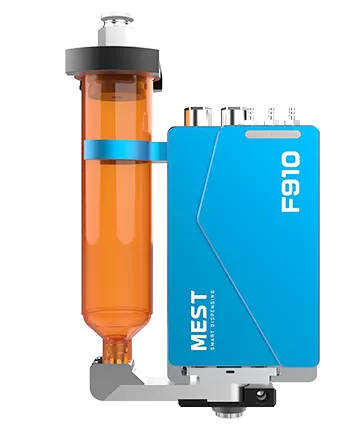
Jetting vs. traditional dispensing – why leading EMS providers choose MEST?
1. Significantly Improved Speed and Boosted Production Efficiency
Jeting dispensing offers significantly faster response times than traditional screw valves, enabling high-density dispensing tasks in a shorter timeframe. This approach is particularly well-suited for the rapid pace of high-volume electronics manufacturing.
2. Higher Precision Adapts to the Trend of Miniaturized Components
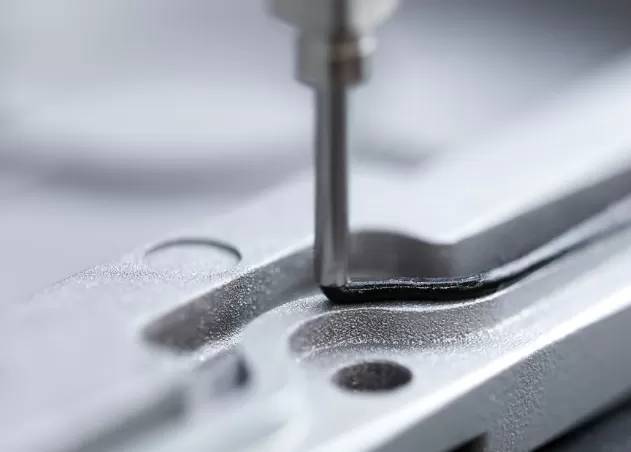
Our jetting valve precisely controls the amount of glue, eliminating the problems of overflow and breakage often associated with traditional dispensing. This meets the process requirements of high-precision packaging and fine-pitch components.
3. Non-contact dispensing protects sensitive components.
The traditional potting electronics process requires physical contact with the workpiece, which may cause damage to fragile substrates (such as flexible circuits); while jetting technology completely avoids this risk by operating in mid-air.
4. More Stable Glue Control Significantly Reduces Material Waste
Traditional methods are prone to smearing or stringing due to mechanical delays. Jetting technology achieves consistent dot shape through instantaneous start and stop, reducing glue loss at the source.
5. Easier maintenance and higher long-term reliability.
Traditional screw valves are prone to failure due to glue curing or wear. However, the jet valve's streamlined structure and lack of mechanical friction components significantly reduce downtime and maintenance frequency.