English
What are you looking for?

An auger dispenser, auger valve, and progressive cavity pump can all be used to deliver controlled amounts of material, but they are designed around different dispensing mechanisms and process requirements. An auger-based system meters material through a rotating screw, while a progressive cavity pump uses a rotor-and-stator mechanism to generate continuous, low-pulsation flow.
For powdery, granular, or highly viscous materials that require controlled volumetric delivery, an auger-based solution can be highly effective. A progressive cavity pump becomes more relevant when continuous flow, gentle material handling, and stable delivery of viscous or shear-sensitive materials are the priorities.
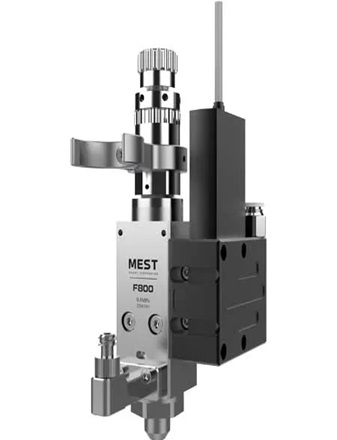
The distinction between an auger dispenser and an auger valve is also important: an auger valve is typically the metering component, while an auger dispenser or complete auger dispensing system can include the valve, drive mechanism, material reservoir, controller, and feeding components.
An auger dispenser uses a rotating screw, or auger, to transport and meter material through a controlled dispensing path. As the auger rotates, material is captured between the screw flights and moved toward the outlet.
The amount dispensed can be controlled through parameters such as auger rotation speed, rotation time, screw geometry, material characteristics, and the relationship between the feeding mechanism and the dispensing nozzle.
This makes the technology particularly useful when the process requires repeatable volumetric dosing rather than simply opening and closing a material passage.
An auger pump dispenser can therefore be configured for applications where controlled delivery of powders, pastes, granules, or other challenging materials is required.
The terms are sometimes used interchangeably, but they can refer to different levels of a dispensing system.
An auger valve generally describes the valve or metering mechanism containing the rotating auger. Its primary function is to regulate and meter material through the outlet.
An auger dispenser can refer to the broader dispensing unit built around that mechanism. Depending on the equipment configuration, it may include the auger valve, motor, controller, reservoir, pressure or feeding mechanism, and nozzle.
This distinction matters when comparing equipment from different manufacturers. One supplier may describe the complete equipment as an auger dispenser, while another may use auger valve to describe the core dispensing head.
For equipment selection, it is therefore more useful to compare the actual metering mechanism and complete system configuration than the terminology used in a product name.
A progressive cavity pump uses a helical rotor rotating inside an elastomeric or otherwise compatible stator. The interaction between the two creates sealed cavities that progressively move material from the inlet to the outlet.
Unlike a conventional auger pump dispenser, which uses a screw to transport and meter material, the progressive cavity principle is designed primarily around controlled continuous flow.
This difference becomes important for process behavior. Progressive cavity pumps can provide relatively smooth, low-pulsation material transfer and are often selected for continuous dispensing of viscous fluids, pastes, and materials where stable flow is more important than rapid individual dosing cycles.
An auger-based system, by comparison, can be advantageous when the process is based on discrete doses and the material responds well to screw-based volumetric metering.
Accuracy depends heavily on the material and process, so there is no universal winner between auger and progressive cavity technology.
An auger-based system can achieve precise dosing when the material has consistent bulk density and flow characteristics. Auger speed, rotation angle, cycle time, and screw geometry can be controlled to produce repeatable quantities.
However, materials that bridge, compact, segregate, or change density can introduce variation. In these cases, the feeding system becomes just as important as the auger itself.
Progressive cavity pumps can provide highly consistent flow for suitable liquid and paste materials because the rotor and stator create controlled displacement through successive cavities. Their performance can be particularly useful when a stable continuous flow rate is required.
For either technology, accuracy should be evaluated under actual production conditions rather than based solely on the nominal dispensing resolution of the equipment.
An auger dispensing system is particularly suitable for materials that can be conveyed consistently by a screw mechanism.
Depending on the screw design and equipment configuration, applications can include powders, granules, pastes, creams, solder-related materials, adhesives, and other viscous compounds.
Material characteristics are critical. Particle size distribution, bulk density, moisture content, viscosity, thixotropy, abrasiveness, and tendency to bridge can all influence dispensing performance.
For powder-based applications, for example, a material may not feed consistently simply because the auger has sufficient torque. The hopper design, agitation, refill method, and material conditioning may also need to be optimized.
A progressive cavity pump becomes attractive when the process requires continuous and controlled transfer of viscous material rather than rapid discrete dosing.
The enclosed cavities formed between the rotor and stator can maintain a relatively stable flow as the rotor turns. This makes progressive cavity technology suitable for materials that need smooth handling or where pulsation could negatively affect the final application.
It can also be considered when maintaining a consistent bead, stream, or continuous coating is more important than achieving extremely rapid individual shots.
However, the stator is a wear component, and material compatibility must be carefully considered. Abrasive materials, aggressive chemicals, operating temperature, and pressure requirements can all affect service life and pump selection.
Yes, but viscosity alone should not determine the selection.
An auger valve can provide the mechanical force needed to move and meter certain high-viscosity materials, particularly when the material is compatible with screw-based conveying.
The more important question is how the material behaves under shear and pressure. A highly viscous material that remains consistent during processing may be relatively straightforward to meter, while a thixotropic or particle-filled compound can behave very differently.
The required shot size also matters. A system designed for large-volume dosing may not be appropriate for micro-dispensing simply because it can handle a high-viscosity material.
Several variables influence the repeatability of an auger-based dispensing process.
Screw geometry determines how much material is transported during each rotation, while motor control affects the consistency of rotational movement. Material density and flow characteristics influence how consistently the screw is filled.
The feeding pressure or hopper configuration can also change the amount of material entering the auger. If material compacts or forms a bridge above the screw, the same rotational command may produce different output volumes.
For this reason, a reliable auger dispenser should be evaluated as a complete material-delivery system rather than treating the screw as an isolated component.
Calibration using the actual dispensing material is especially important when the application has strict volume or weight tolerances.
The appropriate technology depends on what the dispensing process needs to control.
| Requirement | Auger Dispenser / Auger Valve | Progressive Cavity Pump |
|---|---|---|
| Discrete dosing | Well suited | Possible, but less typical |
| Continuous flow | Possible | Well suited |
| Powders and granules | Strong application fit | Generally unsuitable |
| High-viscosity pastes | Suitable with proper design | Strong application fit |
| Low-pulsation flow | Application dependent | Major advantage |
| Material feeding consistency | Highly important | Highly important |
| Screw-based volumetric metering | Yes | No |
| Rotor/stator wear | No stator requirement | Requires stator consideration |
| System configuration | Often modular | Pump-focused system |
An auger solution is generally worth considering when controlled screw-based dosing is required, particularly for powders, granules, or materials that benefit from positive mechanical feeding.
A progressive cavity pump is more appropriate when smooth, continuous, and controlled flow is the central requirement.
The difference between an auger dispenser, auger valve, and progressive cavity pump is fundamentally related to how each technology moves and meters material.
An auger valve is the core screw-based metering mechanism, while an auger dispenser may describe a broader dispensing assembly built around that mechanism. These systems are particularly useful for controlled dosing of materials that can be consistently conveyed by an auger.
Progressive cavity pumps use a rotor-and-stator structure to produce continuous, controlled flow and are often better suited to viscous fluids, pastes, and applications where low pulsation is important.
For manufacturers selecting dispensing equipment, the most reliable approach is to evaluate material behavior, required dose or flow rate, dispensing pattern, accuracy requirements, production speed, and maintenance conditions together. Matching the metering technology to the actual material and process is more important than choosing based on the equipment category alone.
It is used to meter and dispense controlled quantities of powders, granules, pastes, and other materials that can be conveyed by a rotating screw.
Not necessarily. An auger valve generally refers to the screw-based metering component, while an auger dispenser can describe a more complete dispensing assembly.
Yes. Its suitability depends on viscosity, rheology, particle content, screw design, and the required dispensing volume.
It can provide smooth, controlled, low-pulsation flow, making it useful for continuous dispensing of suitable viscous materials.
Yes. Auger-based mechanisms are commonly considered for controlled powder and granular material dosing, provided the material feeds consistently.
Consider whether the process requires discrete dosing or continuous flow, then evaluate material properties, accuracy, flow rate, and maintenance requirements.

Industry professional with deep expertise in dispensing manufacturing technology. Focused on precision fluid control, automation solutions, and process optimization for adhesive, sealant, and coating applications. Leverages practical knowledge of dispensing systems, fluid dynamics, and material science to analyze manufacturing challenges and contribute to efficient, reliable production processes. Experienced in collaborating with cross-functional teams to ensure clarity and precision in technical communication and implementation.