English
What are you looking for?

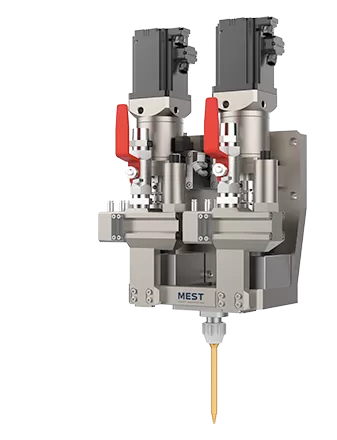
In high-precision dispensing applications, the jetting valve has become a core component increasingly valued and adopted by many enterprises. Although many people know little about jetting valves and may be deterred by their price, in fields such as electronics manufacturing, PCB packaging, and microelectronics sealing—where extremely high precision and speed in dispensing are required—the advantages of jetting valves are irreplaceable.
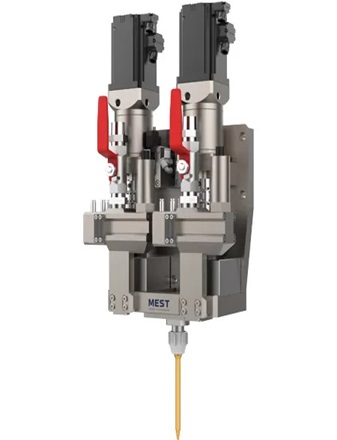
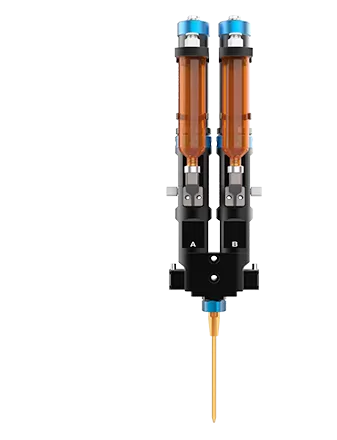
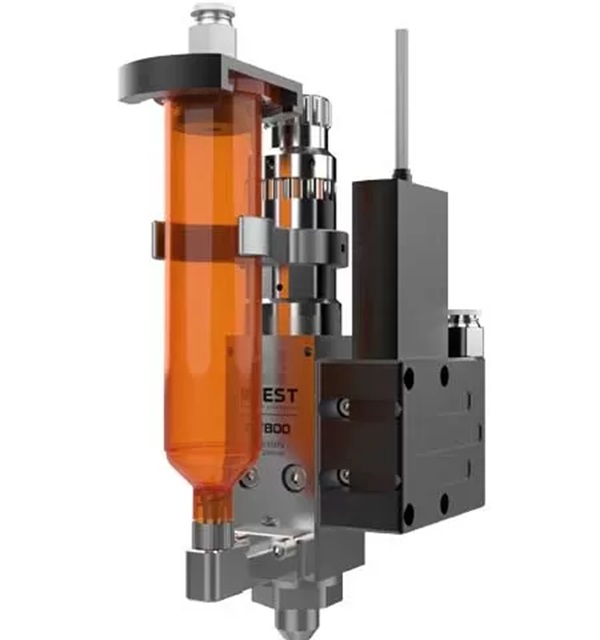
A jetting valve is a non-contact, high-speed dispensing device that uses an internal impact-driven mechanism to eject adhesive at high frequency and high speed from the nozzle, achieving a "needle-like" jetting operation during dispensing.
Non-contact dispensing: The jetting valve uses compressed air to drive a high-speed impact needle, spraying liquid precisely onto the target area without contacting the workpiece surface.
Ultra-high frequency response: With a jetting frequency up to 200 Hz, it significantly shortens cycle times, making it a critical component for speeding up automated production lines.
Precise control: The minimum dispensing diameter can be controlled down to 0.2 mm, achieving micron-level dispensing, suitable for precision components like PCB solder joints, camera modules, chip packaging, and more.
Multi-fluid compatibility: Through a unique adjustment mechanism, users can quickly switch among various fluids such as epoxy resin, UV glue, silicone, conductive adhesive, ink, and grease without frequent recalibration.
Non-contact operation: Avoids damage to sensitive components and improves dispensing consistency.
High micro-control precision: Stable dispensing in small or narrow areas, preventing overflow and stringing.
High-speed dispensing capability: Saves time and increases production line efficiency.
Low fluid waste: Precisely controls the volume of each dispense, reducing material costs.
High compatibility: Suitable for various viscous and non-viscous liquids, making it an ideal solution for flexible manufacturing.
Jetting valves tend to be relatively expensive—sometimes nearly as costly as an entire set of ordinary automatic dispensing equipment. However, the high price is justified by the immense value they bring:
Reduce manual intervention time;
Improve product yield;
Lower rework rates;
Support both small-batch multi-product and large-scale automated production.
Especially in industrial environments with stringent demands for precision, efficiency, and compatibility, jetting valves have gradually become standard equipment.
Jetting valves are not just high-end devices—they are the key to future upgrades in dispensing technology. Their advantages of non-contact operation, high speed, high precision, and broad compatibility give them vast application prospects in industrial automation, electronics manufacturing, new energy, and other fields.

Industry professional with deep expertise in dispensing manufacturing technology. Focused on precision fluid control, automation solutions, and process optimization for adhesive, sealant, and coating applications. Leverages practical knowledge of dispensing systems, fluid dynamics, and material science to analyze manufacturing challenges and contribute to efficient, reliable production processes. Experienced in collaborating with cross-functional teams to ensure clarity and precision in technical communication and implementation.